Airtime and mobile money: not the same thing
یہ مضمون فی الحال انگریزی میں ہے۔
Short answer
Airtime and mobile money are different. A top-up adds airtime or a data bundle to a phone number, for calls, texts and internet. Mobile money is a separate payment or wallet service, run by operators or other providers, that lets people store, send and spend money. We send airtime and data bundles; we don't send mobile money, and a top-up can't be withdrawn as cash.
What airtime is
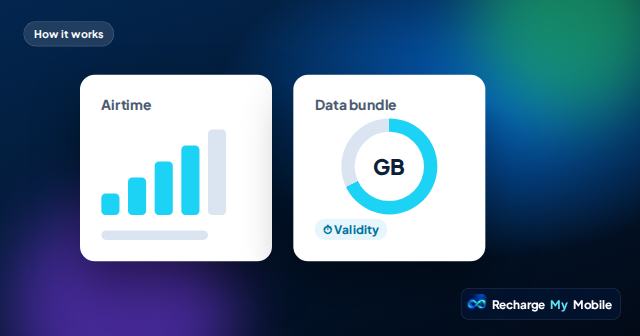
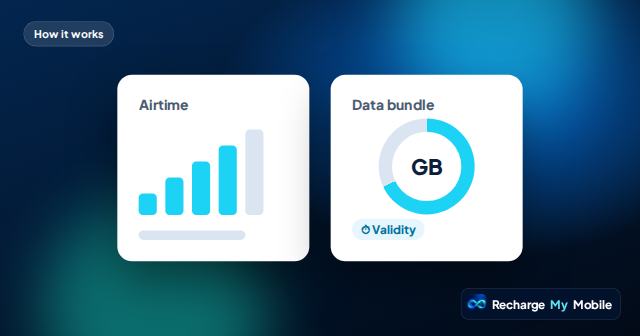
Airtime is prepaid credit on a mobile number. The operator deducts from it as the phone makes calls, sends texts and, on some networks, uses data. A data bundle is a package of internet use with a validity period.
When you send a top-up through our site, it's airtime or a data bundle. It's for using the phone, and it goes straight to the recipient's number once the operator credits it.
What mobile money is
Mobile money is a financial service. It lets people keep a balance in an account or wallet linked to their phone, and use it to send money, pay bills or buy things. In some countries it's very widely used.
Mobile money services are run by operators or other providers, and they have their own rules, registration requirements and fees. They're separate from airtime, even when the same company provides both.
Key differences at a glance
The two are easy to confuse, so here's a simple comparison.
- Airtime: credit for calls, texts and sometimes data on a phone number.
- Data bundle: a package of mobile internet with a validity period.
- Mobile money: a wallet or account for storing and sending money.
- Airtime is used up as the phone is used; mobile money is spent or sent like cash.
- We send airtime and data bundles; we don't send mobile money.
Why it matters when you send
If your family needs money for bills, food or school fees, a top-up isn't the right tool. Airtime is for using the phone, and the recipient usually can't turn it into cash.
If they need to call, message or use the internet, a top-up is ideal. Ask what they need before sending, so your support lands where it helps.
Can airtime be used to pay for things?
On some networks, operators let customers use their airtime balance for certain services, such as buying bundles or extra features from the operator itself. What's allowed varies widely and is set by each operator.
That doesn't make airtime the same as money. It stays tied to the phone number and the operator's own services. The recipient's operator can confirm what their airtime can be used for.
Choosing what to send
Think about the purpose first.
- To keep them calling and messaging: airtime.
- To keep them online for video calls and apps: a data bundle.
- To help with bills, shopping or fees: a money transfer service, not a top-up.
- Not sure: ask them what would help most.
Watch out for confusion scams
Some scams play on the confusion between airtime and money. A stranger might ask you to top up their number and promise to pay you back in cash or mobile money. Be very cautious with offers like this, and never share one-time codes.
Questions people ask
Can I send mobile money through your site?
No. We send airtime and data bundles to prepaid numbers. Mobile money is a separate service run by operators or other providers.
Can the recipient turn airtime into cash?
Generally a top-up is for using the phone, not for withdrawing as cash. The recipient's operator can explain how their airtime can be used.
Is airtime the same as a mobile wallet balance?
No. Airtime is credit for calls, texts and sometimes data. A mobile wallet holds money for payments and transfers.
Why do some operators offer both airtime and mobile money?
Many operators run a mobile money service alongside their phone network. They're still separate products with separate rules.
Should I send load or send money for them to load?
If they need phone credit, a top-up goes straight to the number and is ready for calls or data. If they'd rather choose their own promo or pay other bills, a money transfer to a mobile wallet may suit them better. We send airtime and data bundles only, not money.