Number formats and dialling codes: getting the number right
Nasa English muna ang artikulong ito.
Short answer
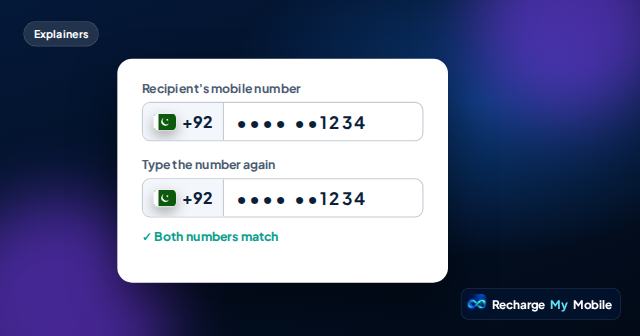
To enter a number for an international top-up, choose the country, then type the mobile number after its country code without the leading 0 used for local calls. For example, a Pakistani number written locally as 03 followed by more digits is entered after +92 starting from the 3. Copy the number from a message rather than memory, type it twice, and check the last digits on the quote.
Country codes for common destinations
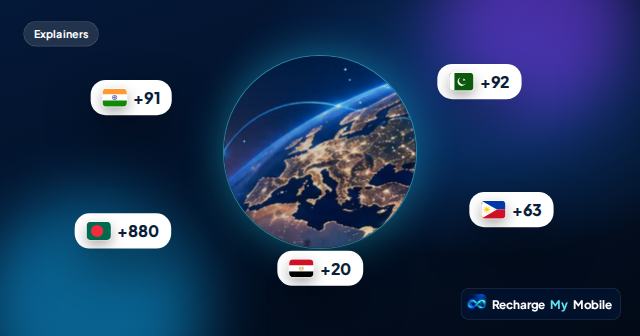
These are the country codes for the destinations families in the UAE most often send to. When you choose the country on our form, the code is added for you.
- Pakistan: +92
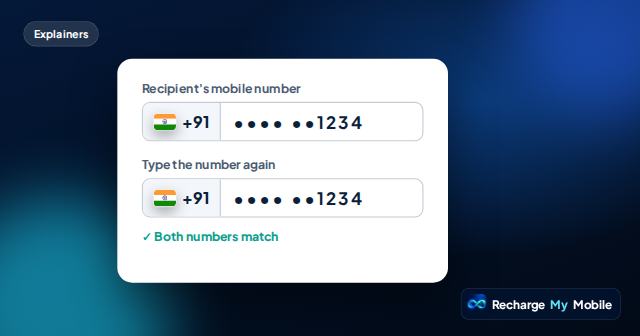
- India: +91
- Philippines: +63
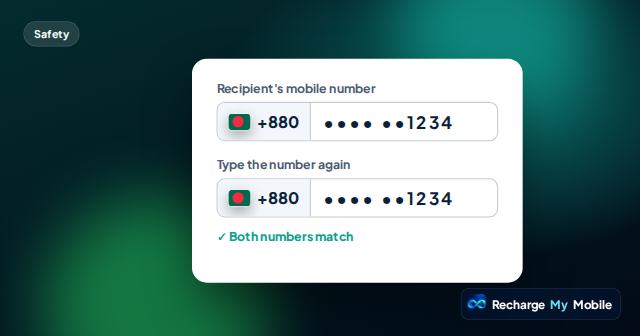
- Bangladesh: +880
- Nepal: +977
- Sri Lanka: +94
- Egypt: +20
- Indonesia: +62
- Ethiopia: +251
- Uganda: +256
The leading 0 rule
In many countries, people write mobile numbers with a 0 at the start. That 0 is a trunk prefix, used only when dialling inside the country. When the number is dialled from abroad, the 0 is dropped and the country code takes its place.
So for Pakistan, the Philippines, Bangladesh, Sri Lanka, Egypt, Indonesia, Ethiopia and Uganda, if the recipient writes their number starting with 0, leave the 0 out after the country code. Indian mobile numbers have ten digits after +91; some people add a 0 in front locally, which you also leave out.
Other things people add by mistake
Numbers copied from messages or contact lists can carry extras. Our form tidies spaces and dashes, but watch for these.
- The country code typed twice, such as +92 then 92 again.
- A 00 in front, which is another way of writing the plus sign.
- A leading 0 left in after the country code.
- A missing digit when someone reads the number out loud.
Get the number from the source
The most reliable number is one the recipient sends you in a message, or one you copy from a recent chat with them. Numbers typed from memory, or read out over a noisy call, are where most mistakes start.
If the recipient has two SIMs, ask them to send the number of the SIM they want topped up. People often know one of their numbers by heart and not the other.
Why we ask you to type it twice
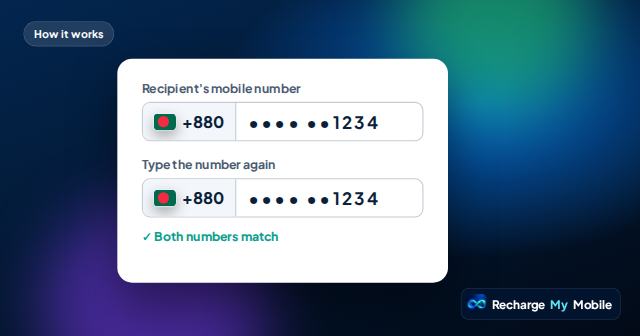
Typing the number twice stops a single slipped digit from sending credit to a stranger. If the two entries don't match, we ask you to fix them before you continue. It takes a few seconds and prevents the one mistake that usually can't be undone.
We also check the format for the country you chose. A number that's too short, too long or starts oddly will be flagged.
A final check on the quote
The quote shows the number masked so only the last digits are visible, like ••••1234, along with the country and the operator. Compare those last digits with the number the recipient sent you before you pay.
A correct format doesn't prove who owns the number. Only the recipient can confirm it's theirs. Once an operator credits a number, a top-up usually can't be reversed.
Questions people ask
Do I include the 0 at the start of a mobile number?
No. After the country code, leave out the leading 0 that people use for local calls in their own country.
What is the country code for Bangladesh?
It's +880. Enter the Bangladeshi number after it, without the leading 0 used for local calls.
What does 00 mean in front of a number?
It's another way of writing the international plus sign. Don't type it on our form; choose the country instead.
Why does the quote hide most of the number?
To protect the recipient's privacy. The last digits are enough for you to check you entered the right number.
Does a correctly formatted number prove it's the right person?
No. A valid format only shows the number could exist. Ask the recipient to confirm it's theirs.