Helping someone who isn't comfortable with phones

මෙම ලිපිය දැනට ඉංග්රීසියෙන් ඇත.
Short answer
If the person you're topping up isn't comfortable with phones, keep it simple: you handle the order, choose a straightforward option such as airtime, and tell them clearly what you've sent and when. Agree on how they'll know it arrived, and ask a nearby relative or their operator to help if something doesn't look right. They don't need to do anything to receive a top-up.
They don't need to do anything to receive it
A top-up goes straight to the phone number. The recipient doesn't need an app, an account or a password. Once the operator confirms the credit, it is on their phone.
That makes top-ups a kind gift for someone who finds technology stressful. You do the work; they simply use their phone as usual.
Choose the simplest option
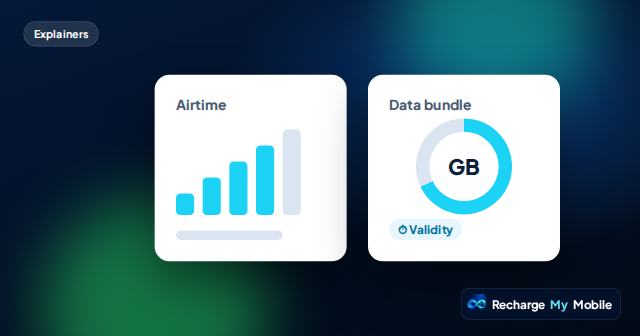
Bundles can be confusing if someone has never used one. Data bundles may need mobile data switched on, and some come with rules about validity or which apps they cover.
Airtime is often easier to understand: it is credit for calls and texts. If the person mainly makes normal calls, airtime may suit them best. If they use video calls with your help, a data bundle may be worth it, but explain it once in plain words.
Tell them what you sent
A short, clear message or call helps more than you might think.
- Say what you sent: "credit for calls" or "internet for video calls".
- Say roughly when you sent it.
- Tell them they may get a message from their network when it arrives.
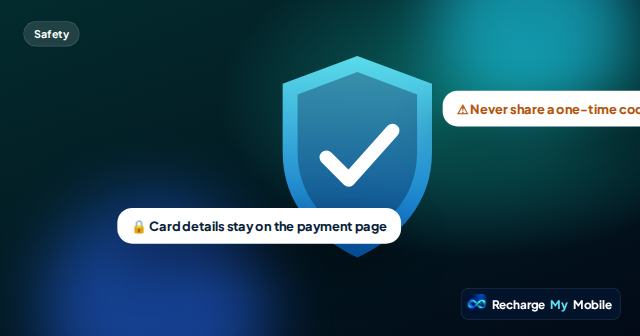
- Remind them never to share any code that arrives by text with anyone who calls asking for it.
- Tell them who to ask if something seems wrong: you, a nearby relative or their operator.
Checking that it arrived
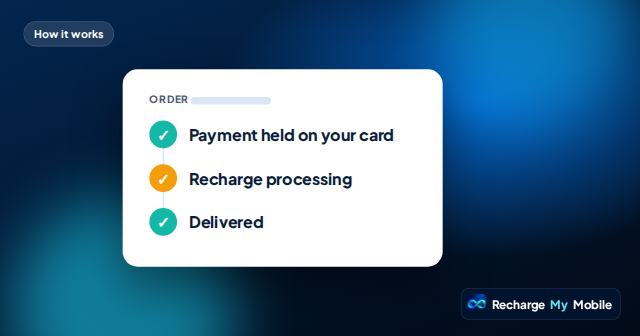
You can follow the order yourself. The order page shows "Payment held on your card", then "Recharge processing", then "Delivered", with the supplier's transfer reference once delivered.
The recipient can check their balance the usual way for their network. If they don't know how, a family member nearby or their operator can show them. Operators usually credit quickly, but some take longer.
Protect them from scams
People who are less confident with phones are sometimes targeted by callers pretending to be from a network, a bank or a relative. A common trick is asking them to read out a code that has just arrived.
Agree on a simple rule together: never share codes, and always call you back on the number they know before doing anything someone asks. Topping up for them yourself also means they never have to give card details to anyone.
Questions people ask
Does my mother need a smartphone to receive a top-up?
No. Airtime can go to a basic phone too, as long as the number is prepaid and on an operator in our catalogue. Data bundles are mostly useful on smartphones.
How will my relative know the top-up has arrived?
Many networks send a message when credit arrives, and the recipient can check their balance the usual way. You can also follow the order page.
Should I send airtime or data to an elderly parent?
If they mainly make normal calls, airtime is usually simpler. If they video call with family, a data bundle may suit them better.
What if they say nothing arrived?
Check the order page first. If it shows delivered and they still see nothing, open a case from the order page and we check with our supplier.
Can I do the whole top-up for my relative?
Yes. You place the order, pay on the secure payment page and track it. The recipient simply uses their phone once the credit arrives.
Read next
- Top-ups for parents and grandparents: making it easy for them මිනිත්තු 5 ක කියවීමක්
- Checking the balance after a top-up: what the recipient can do මිනිත්තු 4 ක කියවීමක්
- Never share one-time codes: why it matters මිනිත්තු 4 ක කියවීමක්
- Airtime or a data bundle: which should you send? මිනිත්තු 5 ක කියවීමක්