Why we ask for the country first
Artikel ini untuk sementara dalam bahasa Inggris.
Short answer
We ask for the destination country first because everything else depends on it: the dialling code, the number format we check against, the operators available and the products they offer. Choosing the country first means we can check the number properly, show only the operators that work there, and give you a quote in your currency for that destination.
The country shapes everything else
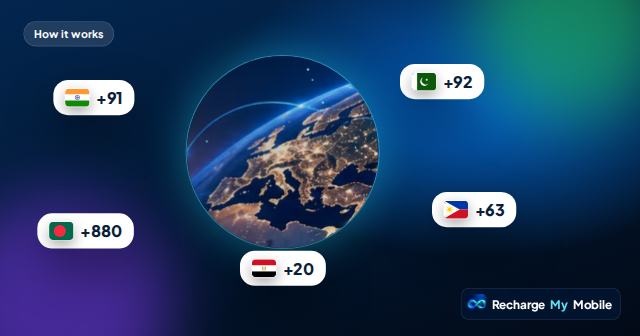
Phone numbers only make sense within a country. The same digits could be a valid number in one place and meaningless in another. Each country has its own dialling code, number lengths and patterns.
Operators are national too. The networks in Pakistan are different from those in the Philippines or Egypt, and each has its own products, amounts and rules.
What choosing the country does
Once you've chosen the country, several things happen behind the scenes.
- The dialling code is set, so you don't need to type it.
- We know which number format to check against.
- We can look up the operator, where that's available for the country.
- You see only the operators we support there.
- You see only the products those operators offer.
- Any country-specific details, such as operator taxes reported by our supplier, can be shown on the quote.
It reduces mistakes
Many wrong-number problems come from mixing up dialling codes or leaving out digits. When the country is chosen first, the form knows what a correct number looks like there and can catch many slips.
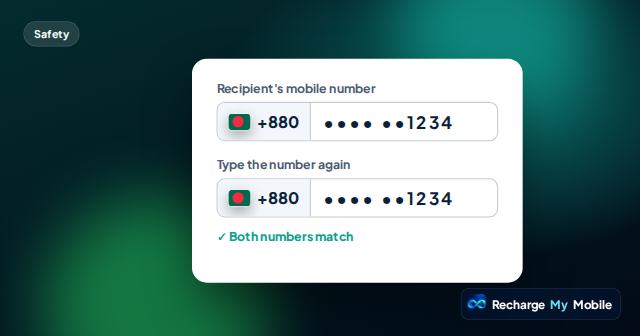
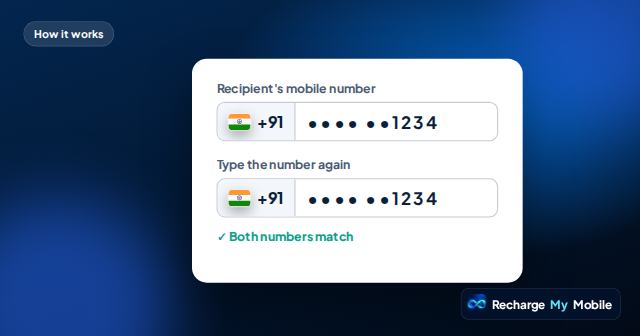
You also type the number twice, so a typo can't send credit to a stranger. Together, these checks catch most mistakes before you see a quote.
What the checks can't do
A number that fits the country's format may still belong to someone other than the person you meant. Format checks don't prove ownership.
Operator lookups aren't always available. If we can't confirm the operator, you choose it from the list for that country; we never guess. That's a normal path, not an error.
Choosing the right country
Choose the country where the recipient's SIM is registered, not where they are right now. If your relative from Nepal is visiting India with their Nepali SIM, choose Nepal.
If they have a local SIM in the country they're visiting, choose that country and use that number instead. Ask them which number they want topped up.
Country, currency and quotes
The destination country also decides the currency the top-up is valued in, such as rupees, taka or pesos. You pay in the currency you choose in the site header, and the quote converts between the two.
That's why the quote can label "Recipient gets" as an estimate for some destinations: exchange rates and operator rules in that country can affect what arrives.
Countries we support
Our catalogue lists the destinations we can send to. If a country isn't listed, we can't send top-ups there at the moment. The list can change as we add or review destinations.
Questions people ask
Why can't I just type the full international number?
Choosing the country first sets the dialling code and number format, so we can check the number properly and show the right operators.
Which country should I choose if my relative is travelling?
Choose the country where their SIM is from. If they've bought a local SIM where they're visiting, choose that country and number instead.
What if my country isn't listed?
We can only send to destinations in our catalogue. If a country isn't listed, we can't send top-ups there right now.
Do I need to type the country code?
No. Once you choose the country, the dialling code is set. Type the rest of the number twice.
Can I change the country after entering the number?
Yes, before you pay. Choose the new country and enter the number again, because the format check, operators and products all depend on the country.