Why prices differ between operators in the same country
এই লেখাটি আপাতত ইংরেজিতে।
Short answer
Prices differ between operators in the same country because each operator sets its own products, amounts and rules, and local taxes and exchange rates can affect each one differently. A bundle on one network may include different data or validity from a similar one elsewhere. The fairest comparison is what the recipient actually gets for what you pay, on the network they really use.
Each operator runs its own products
Operators in the same country compete with each other, and each designs its own prepaid offers. One might focus on large data bundles, another on calls, another on short-validity packs. Their prices reflect their own costs and strategy.
So two top-ups that look similar on the surface may differ in what they include, how long they last and how they're priced. That's normal, not a sign that something is wrong.
Things that can make prices differ
Several factors can affect what you pay and what arrives.
- The operator's own pricing for the product.
- What the bundle includes: data, minutes, texts or app access.
- Validity: how long the bundle or credit lasts.
- Exchange rates between your currency and the destination currency.
- Taxes deducted by the operator, where they apply.
- Any service fee, which is included in "You pay".
The operator isn't a free choice
When you top up someone else, the operator is decided by the recipient's SIM, not by price. A top-up only works on the network the number is on.
We check the number's format and, where available, its operator. If we can't confirm the operator, you choose it; we never guess. Sending to the wrong operator to save money doesn't work: the recipient's SIM needs credit from its own network.
How to compare fairly
Compare like with like. For data, look at the data amount and validity, not just the price. For airtime, look at "Recipient gets", and note whether it's labelled as an estimate.
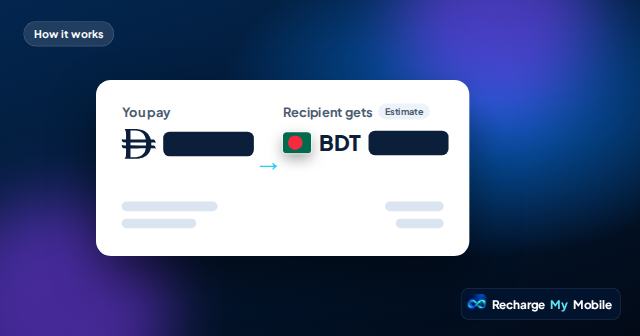
The quote shows "You pay" in the currency you choose in the site header and "Recipient gets" for that operator. Where our supplier reports an operator tax, the quote shows the top-up amount and what arrives after it.
Why the same operator's price can change
If you notice a difference from last time, read the new quote carefully. You're never charged at an old, expired price, and you can decide whether to go ahead.
Practical tips
A little preparation makes comparing easier.
- Confirm which network the recipient is on before you look at prices.
- Ask whether they need data, calls or both.
- Compare data and validity together, not price alone.
- Check whether "Recipient gets" is marked as an estimate.
- Choose the currency you want to pay in from the site header first.
When the recipient is choosing a new SIM
If someone is picking a network for a new SIM, prices are only one factor. Coverage where they live, which network their family uses and the products they need often matter more. Their own experience and local advice are the best guides.
Questions people ask
Why is a top-up more expensive on one network than another?
Each operator sets its own products and prices, and taxes or exchange rates may affect them differently. Compare what the recipient gets, not just the price.
Can I send credit from a different operator to save money?
No. A top-up only works on the network the recipient's SIM is on. The operator must match the number.
Does the exchange rate change the price?
It can. If you pay in one currency and the top-up is in another, exchange rates affect the quote. Estimates are labelled as estimates.
Is the service fee the same for every top-up?
The quote shows "You pay" as a total including any service fee for that specific top-up, so check each quote before paying.