Prepaid or postpaid: which numbers can be topped up?
এই লেখাটি আপাতত ইংরেজিতে।
Short answer
International top-ups are made for prepaid numbers: phones where the user adds credit before using it. Postpaid or contract numbers, where the user gets a monthly bill, usually can't receive a prepaid top-up, and the operator normally rejects it. Some operators offer mixed plans with their own rules. If you're unsure, ask the recipient whether they buy credit or pay a monthly bill, or ask them to check with their operator.
Prepaid and postpaid in plain words
With prepaid, the user pays first and uses later. They add credit or buy a bundle, then spend it. When it runs out, they top up again. This is how most mobile users in many of the countries families in the UAE send to, such as Pakistan, India, Bangladesh and the Philippines, manage their phones.
With postpaid, the user uses first and pays later. They have a contract or plan and get a bill, usually monthly. Credit isn't loaded in advance in the same way.
Why top-ups are for prepaid numbers
A top-up adds prepaid credit or a prepaid bundle to a number. A contract account doesn't hold prepaid credit in the same way, so the operator usually refuses the top-up.
Some operators offer hybrid plans, with a monthly allowance plus the option to add credit. Whether those can take an international top-up depends on the operator. The recipient's operator can confirm.
How to tell which type a relative has
The easiest way is to ask a couple of plain questions.
- Do you buy credit or bundles when you run out?
- Or do you get a bill every month?
- Is your SIM in your own name, or on a family or work plan?
- If you're not sure, could you ask your operator or check your account?
What happens if you top up a postpaid number?
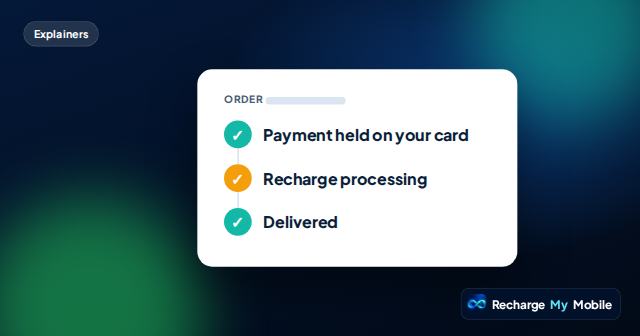
In most cases the operator rejects the top-up. Our order page then shows that the top-up failed, and the hold on your card is released, so you aren't charged. You don't need to do anything to start it.
Rarely, an operator may accept credit on an account type you didn't expect. If the order says Delivered, the credit has gone to that number and usually can't be reversed. That's why it's worth checking first.
Office phones, family plans and data-only SIMs
Work phones are often on company contracts, and some family members share a plan paid by one person. Neither usually takes a prepaid top-up. Data-only SIMs, used in a tablet or a home router, may be prepaid but are sometimes listed as a separate product by the operator.
If our catalogue lists a separate product for that kind of SIM, choose it. If you're unsure, the recipient's operator can confirm what the SIM accepts.
When someone has switched from contract to prepaid
People sometimes move from a contract to prepaid when they retire, change jobs or leave a family plan. In many places they can keep the same number. If a relative has done this recently, ask them to confirm the change has gone through before you send a top-up.
Until the switch is complete, the operator may still treat the number as a contract account and reject the top-up. If that happens, the hold on your card is released, so you aren't charged, and you can try again once the number is active on prepaid.
Questions people ask
Can I top up a postpaid number from abroad?
Usually not. International top-ups are designed for prepaid numbers, and operators normally reject them on contract accounts.
What happens if I send a top-up to a contract number?
The operator usually rejects it, the order shows as failed, and the hold on your card is released, so you aren't charged.
How do I know if a number is prepaid?
Ask the recipient whether they buy credit when they run out or get a monthly bill. Their operator can confirm.
Can I pay someone's monthly phone bill with a top-up?
No. A top-up adds prepaid credit; it isn't a bill payment. The recipient would need to pay the bill through their operator.