Sent a top-up to the wrong number? Read this first
මෙම ලිපිය දැනට ඉංග්රීසියෙන් ඇත.
Short answer
If you think you sent a top-up to the wrong number, first check the order page. If it failed, the hold on your card is released and you aren't charged. If it's still processing, open a case straight away. If it says Delivered, the operator has credited that number, and the top-up usually can't be reversed. Check the last digits on the order against the right number, then open a case so we can check with our supplier.
First, check what actually happened
Before you worry, open the order page and look at the number shown, masked to its last digits. Compare it with the number the recipient uses. Sometimes the number is right, and the credit is simply on another SIM, in a different balance, or still processing.
Also check the country and the operator. A top-up to the right digits but the wrong country or network usually fails, and you aren't charged for a failed top-up.
What you can do, by status
The order status tells you what's possible.
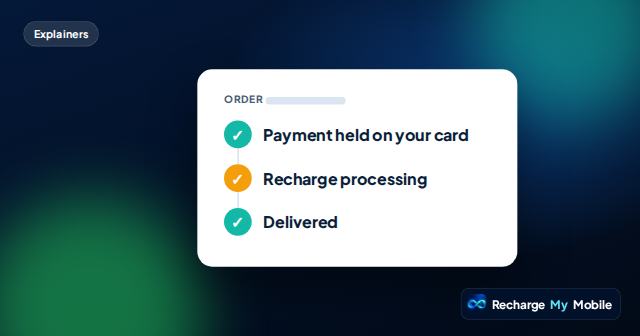
- Not delivered: nothing was credited, so the hold on your card is released and you aren't charged.
- Recharge processing: open a case from the order page now. We'll check with our supplier, although a top-up already with the operator may still go through.
- Delivered: the operator has credited the number. Open a case so we can check, but the top-up usually can't be reversed.
Why a credited top-up usually can't be reversed
Once an operator adds credit to a number, the person using that number can spend it straight away. Operators generally don't take credit back from one customer to return to another, and they don't share that customer's details with us.
We can't change the recipient after payment, and nor can the Recharge Guide, our AI assistant. It's frustrating, but it protects every phone user from having credit removed by someone else's request.
If you know the person who got it
Sometimes the wrong number belongs to someone you know: a relative's old SIM, or a second number in the same household. In that case, the credit hasn't gone to a stranger, and the family can decide how to use it.
If the number belongs to a stranger, don't try to contact them asking for the credit back, and be wary of anyone who contacts you offering to return it in exchange for payment or codes.
How to avoid it next time
Most wrong-number top-ups come from a few small slips.
- Copy the number from a message rather than typing it from memory.
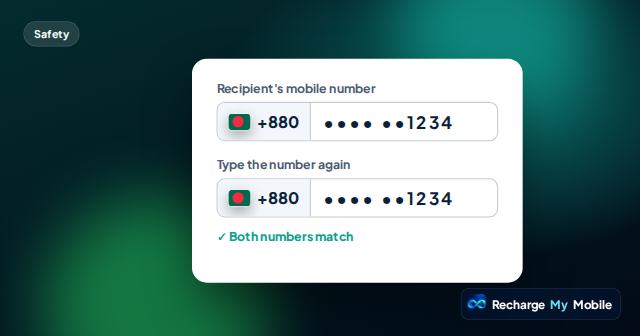
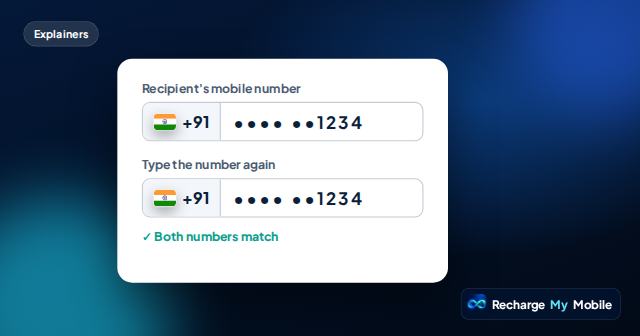
- Type it twice on our form; the two entries must match.
- Leave out the leading 0 after the country code.
- Check the last digits on the quote before you pay.
A valid number isn't proof
Our form checks the format, and where possible the operator, but a valid-looking number doesn't prove who owns it. A number one digit away from your mother's is probably also a real number belonging to someone else. Only the recipient can confirm a number is theirs.
Questions people ask
Can I cancel a top-up sent to the wrong number?
If it hasn't been delivered, open a case right away. Once the operator credits a number, it usually can't be reversed.
Will I get my money back if I entered the wrong number?
If the top-up failed, you aren't charged: the hold on your card is released. If the operator credited the number you entered, the payment is taken and the top-up usually can't be refunded.
Can you tell me who owns the number I topped up?
No. We don't have that information, and operators don't share their customers' details.
Can I change the recipient after paying?
No. The recipient can't be changed after payment, by us or by the Recharge Guide.
Someone says they got my top-up and will return it for a fee. Is it real?
Be very careful. Don't send money or share codes. Use the order page and open a case instead.