Why a valid-looking number isn't proof of who owns it
ഈ ലേഖനം ഇപ്പോൾ ഇംഗ്ലീഷിലാണ്.
Short answer
A valid-looking number only means it fits the pattern for that country, and sometimes that it's linked to a particular operator. It doesn't prove who owns the number, that it's the right person's, or even that it's still in use. Numbers get mistyped, recycled and moved between networks. The safest check is getting the number directly from the recipient and typing it carefully.
What "valid" means
When we say a number looks valid, we mean it has the right length and structure for the country you chose. Where available, we also check which operator the number is on.
These checks are useful. They catch many typos and help match the number to the right products. But they are about the shape of the number, not the person holding the phone.
What a number check can't tell you
Even a perfectly valid number leaves several questions unanswered.
- Who owns the number today.
- Whether it's the number of the person you meant.
- Whether the number is still active, or has been switched off.
- Whether it was recently recycled and given to a new person.
- Whether the person still uses that SIM in their main phone.
Why this matters for top-ups
A top-up goes to the number, not to a name. If the number belongs to someone else, they receive the credit. A top-up to a wrong number usually can't be reversed once the operator has credited it.
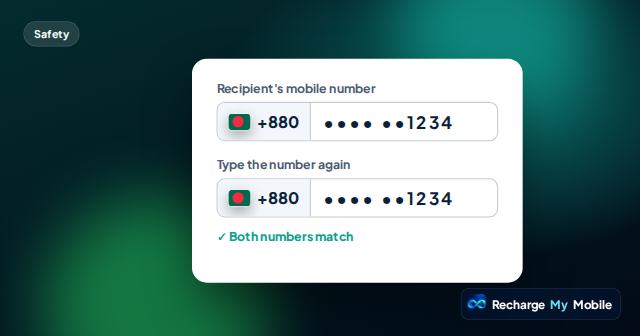
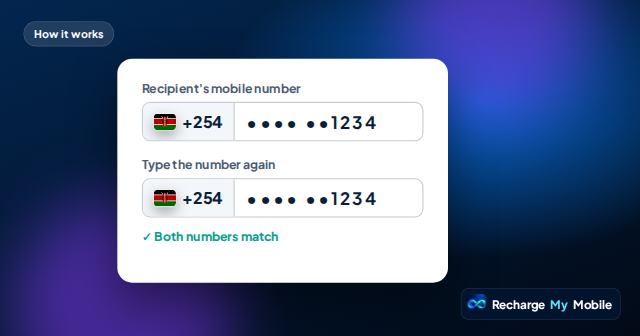
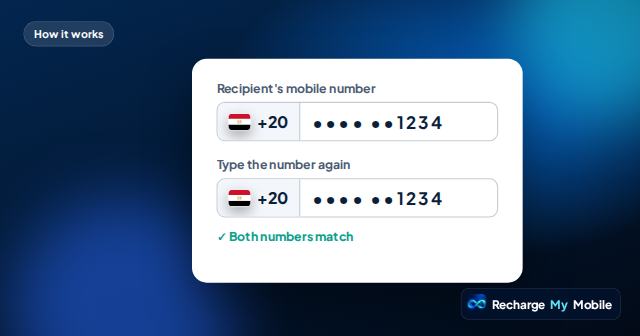
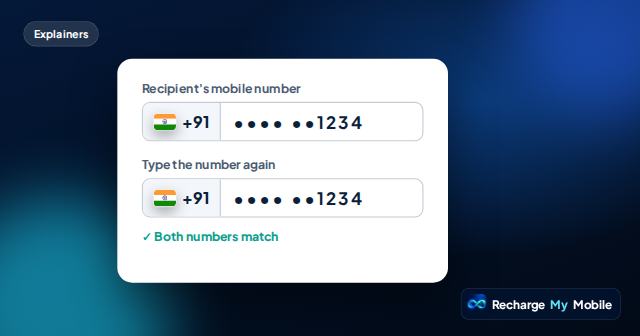
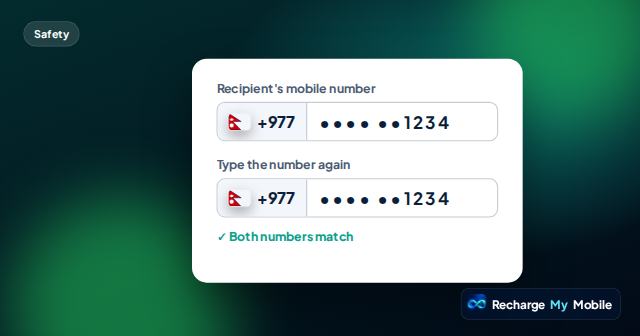
That's why we ask you to type the number twice, and why the quote shows the number masked as ••••1234 for a last check. These steps catch slips, but only the recipient can confirm the number is theirs.
Operators can be uncertain too
People sometimes move a number from one network to another while keeping it. A number's starting digits may suggest one operator when it's actually on another.
Where we can, we check the operator. If we can't confirm it, you choose it; we never guess. If our lookup isn't available at that moment, that's a normal situation, and choosing the operator yourself, based on what the recipient tells you, is the right way forward.
Recycled and inactive numbers
Operators may reassign a prepaid number that has gone unused for a long time, depending on their rules. The number stays valid in format, but it now belongs to someone new.
This often catches people out with numbers saved years ago, such as an old number for a cousin or a former colleague. If you haven't sent to a number for a while, check with the person that it's still theirs before you top it up.
How to be confident before you send
A few habits make wrong-number top-ups very unlikely.
- Ask the recipient for their number in writing, from the phone they use.
- Ask which network they're on now.
- Choose the country first, then type the number twice.
- Check the operator and the last four digits on the quote.
- For a new number, send a smaller top-up first and ask them to confirm it arrived.
Questions people ask
If a number passes the check, does it belong to my relative?
Not necessarily. A check confirms the number's format, and sometimes its operator. Only the recipient can confirm the number is theirs.
Why can't you tell me who owns a number?
Number checks look at the format and network, not personal details. Ownership is information the operator holds about its customers.
What does it mean if the operator lookup is unavailable?
It means we couldn't confirm the operator at that moment. That's normal. You choose the operator, based on what the recipient tells you.
Can a valid number be switched off?
Yes. A number can fit the right format but be inactive or recycled. If unsure, ask the recipient to confirm it from their phone.
Can you check a number before I pay?
We check the format and, where available, the operator. These checks catch many mistakes, but they can't confirm who owns the number.