SIM registration and top-ups: what senders should know
یہ مضمون فی الحال انگریزی میں ہے۔
Short answer
Many countries require mobile SIMs to be registered to the user's identity. Registration is between the SIM user and their operator, so the recipient handles it, not the sender. A top-up doesn't register a SIM. In some places, operators may restrict SIMs that aren't registered or whose details are out of date, so if a top-up fails, registration is worth asking about.
What SIM registration is
SIM registration means linking a SIM card to the identity of the person using it, usually with an ID document. Many countries require it, and the rules are set locally.
Registration is usually done when someone buys a SIM, and sometimes needs updating later, for example when ID documents are renewed or rules change. The operator explains what's needed.
Who does it
The recipient deals with registration directly with their operator. As a sender in the UAE, you can't usually register someone else's SIM for them, and you shouldn't need to.
A top-up doesn't register a SIM and doesn't change who the SIM is registered to. It simply adds airtime or data to the number.
Why it can matter for top-ups
In some places, operators may restrict or suspend SIMs that aren't registered, or whose registration needs updating. A restricted number might not accept top-ups, or might not be able to use the credit.
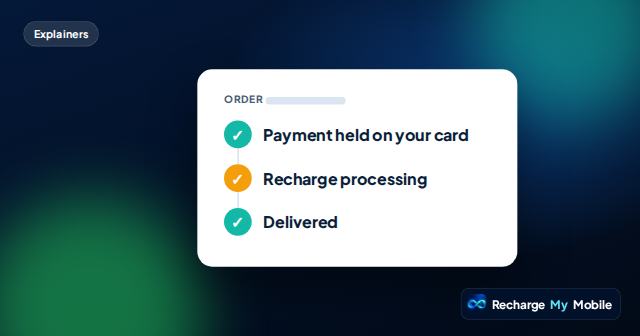
If a top-up to that number fails, the hold on your card is released and you aren't charged. The order page shows what happened. If you're unsure why, it's worth asking the recipient whether their SIM registration is up to date.
What senders can do
You can help without getting involved in the paperwork.
- Remind the recipient that registration is between them and their operator.
- If a top-up fails unexpectedly, ask whether their SIM is registered and active.
- For a brand-new SIM, wait until they confirm it's registered and working before topping up.
- Send a smaller first top-up to a new number and ask them to confirm it arrived.
- Never share or ask for ID documents by message to help someone register.
Be careful with ID documents
Scammers sometimes pose as operators or officials offering to "fix" a SIM registration for a fee or in exchange for ID details. Genuine registration happens directly with the operator, through its official channels.
Encourage relatives never to send photos of their ID documents to strangers, and never to share one-time codes. If someone contacts them about registration unexpectedly, they should check directly with their operator.
Your own SIM back home
If you keep a prepaid number in your home country while living in the UAE, check with your operator that its registration is in order, especially if you've been away a long time.
Your operator can tell you what they need. You can top up your own number from the UAE like anyone else's.
If you plan to be away for a long time, ask them before you leave what keeps the number active and whether your registration needs anything from you while you're abroad.
Questions people ask
Do I need to register the recipient's SIM to send a top-up?
No. Registration is between the SIM user and their operator. You only need the recipient's number to send a top-up.
Does a top-up register a SIM?
No. A top-up adds airtime or data to the number. It doesn't register the SIM or change who it's registered to.
Why did my top-up fail on a new SIM?
There can be several reasons, including the SIM not being active or registered yet. If a top-up fails, the hold on your card is released and you aren't charged.
Can I register my relative's SIM from abroad?
Usually not. The recipient handles registration with their operator, which explains what documents and steps it needs.
Is it safe to send my ID to someone to register a SIM?
Only through the operator's official channels. Never send ID documents or one-time codes to strangers who contact you about SIM registration.